 2021-12-30
Indium gallium nitride (InGaN)-based blue light-emitting diodes (LEDs) are the backbone of the solid-state lighting (SSL), but their luminous efficiency peaks under low current densities (<35A/cm2) and rolls off under high current injection levels (efficiency droop), requiring a design tradeoff between light output power, efficiency and cost.
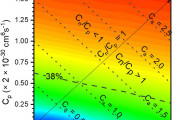
It is widely accepted that Auger recombination is the main cause for the experimentally observed large (~50%) efficiency droop in III–nitride LEDs. Yet there is no clear understanding of the origin of the magnitude of Au...
Continue reading →

 2021-12-30