
2019-04-16

Researchers Create New LED from “Multi-Particle Exciton Complexes”

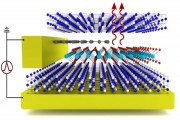
A research team at Vienna University of Technology (TU Wien) developed a new kind of LED which generates light from the radiative decay of exciton complexes in extremely thin layers. Researchers produced what they called as “multi-particle exciton complexes” by applying electrical pulses to extremely thin layers of material made from tungsten and selenium or sulphur. These exciton clusters are bonding states made up of electrons and “holes” in the material and can be converted into light. The result is an innovative form of light-emitting diode in whic...
Continue reading

microLEDs: from headlamps to the data center When we think about the evolution of AI technology, developments in machine learning and large language models come readily to mind, as do the latest graphics processing units (GPUs), high-bandwidth... READ MORE

The question of what makes a building "smart" has been debated in the industry for years. ams OSRAM provided a clear answer at Light + Building 2026: it is light — not as illumination, but as a sensory nervous system. It percei... READ MORE